
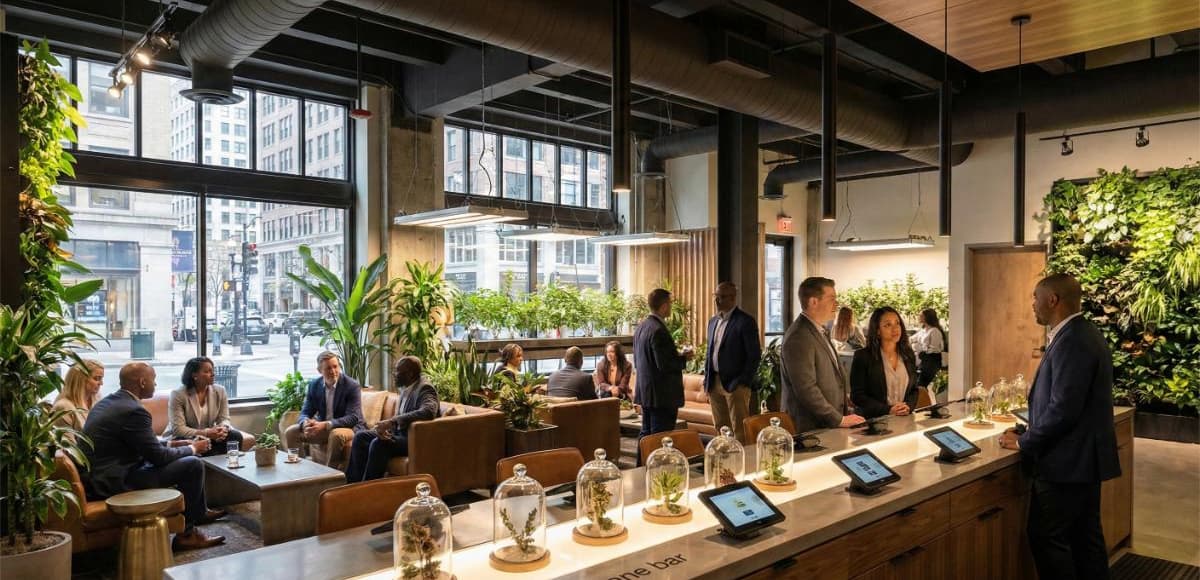
Cannabis consumption lounges are becoming the missing link between legal sales and real-world use. For cannabis brands, that shift matters because experience is hard to replicate online, and regulated, in-person settings create new moments for education and loyalty. If you work with a cannabis marketing agency or manage cannabis marketing in-house, lounges also change what people search for and where they decide to shop.
Which states have them in 2026? A small group has active, regulated pathways, while others have approved rules or are still building a framework.
Key Takeaways✔ Most states rely on municipal opt-in, making local rules just as important as state law. ✔ They provide safe, regulated spaces for education, discovery, and responsible consumption. ✔ Ventilation, visibility, age-gating, and staff training matter more than aesthetics. ✔ Lounges create compliant, in-person moments that fuel SEO, education, and brand trust. |
Table of Contents
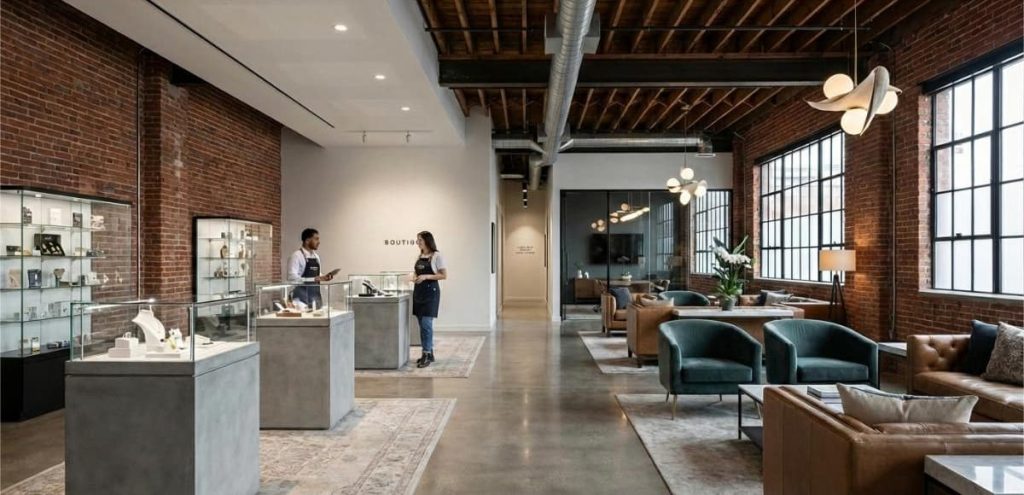
Which States Allow Cannabis Consumption Lounges In 2026
Alaska
- Alaska allows on-site cannabis consumption endorsements at retail dispensaries, with rules for licensing and operation. Alaska was one of the earliest states to permit on-site use legally.
California
- California law allows local jurisdictions to authorize cannabis consumption areas at licensed retailers and microbusinesses, and recent legislation expands licensing for cannabis lounges with food and entertainment.
Colorado
- Colorado authorizes licensed cannabis hospitality and consumption businesses statewide, with local jurisdictions opting in for licensing.
District of Columbia
- DC permits on-site consumption of medical cannabis within designated treatment facility areas tied to licensed retailers.
Illinois
- Illinois law permits local governments to authorize bring-your-own cannabis (BYOC) consumption lounges, and a few have opened with local approval.
Maryland
- Maryland’s House Bill 0566 authorizes a limited number of designated-use cannabis cafes where patrons may consume pre-purchased cannabis on site.
Massachusetts
- Regulators have approved social consumption lounge regulations statewide; local opt-in is required before venues can open under those rules.
Michigan
- Michigan law allows designated consumption establishments where adults can consume cannabis on site, even though not all venues sell products there.
Minnesota
- Minnesota is listed among states that permit on-site social consumption frameworks, such as lounges, under local opt-in systems.
Missouri
- Missouri is included in credible summaries as having authorized on-site consumption or lounge-style venues on a regulated basis.
Nevada
- Nevada’s regulatory framework specifically allows licensing for state-licensed cannabis consumption lounges, though openings have been slow and limited in number.
New Jersey
- New Jersey’s rules permit cannabis consumption lounges, provided they receive approval from both the state and local municipalities; cities such as Jersey City and Atlantic City have enacted ordinances.
New Mexico
- New Mexico’s Cannabis Regulation Act authorizes local jurisdictions to allow cannabis consumption areas where guidelines are met.
New York
- New York’s 2021 Marijuana Regulation and Taxation Act authorizes consumption sites, but regulators have delayed issuing the detailed rules needed to officially open lounges. This means the legal framework exists on paper, but licensed lounges are not yet operational due to pending regulations.
Quick Facts | States That Have Cannabis Consumption Lounges | 2026 Update✔ Alaska ✔ California ✔ Colorado ✔ District of Columbia ✔ Illinois ✔ Maryland ✔ Massachusetts (rules approved; local opt-in required) ✔ Michigan ✔ Minnesota ✔ Missouri ✔ Nevada ✔ New Jersey ✔ New Mexico ✔ New York (framework exists but is not yet implemented) |
What Is A Cannabis Consumption Lounge?
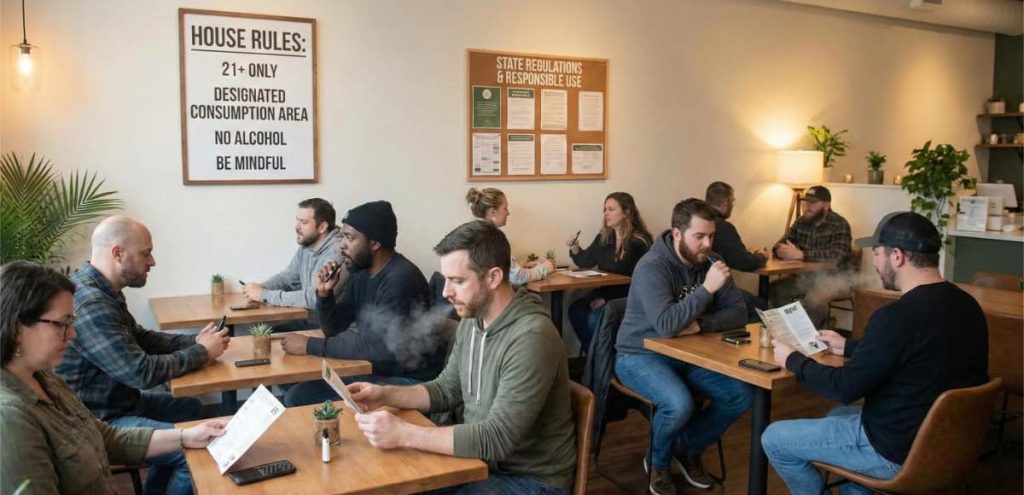
A cannabis consumption lounge is a licensed, age-gated venue where adults can consume cannabis on-site under defined rules. In practice, it may look like a small café, a controlled smoking lounge, or a social cannabis dispensary add-on that keeps consumption away from sidewalks and parking lots.
Regulators typically prioritize guardrails over vibe, focusing on aspects such as ventilation, visibility from outside, employee training, and the handling of leftover products.
How Cannabis Consumption Lounges Actually Operate
Lounges are not “weed bars.” They are controlled venues designed to reduce public nuisance issues and keep minors out.
On-Site Consumption Rules
Typical requirements include:
- Age-gated entry at 21+
- No visible consumption from outside the premises
- Strict ventilation and odor controls
- Clear limits on what can be sold or served
Regulations vary by state, but the common pattern is the same: Lounge access is tied to licensing and local control, with a heavy focus on safety and education. In New Jersey, for example, consumption areas must be connected to a licensed dispensary and meet both state and municipal standards. In Colorado, hospitality-style licensing similarly emphasizes orderly operations and consumer education.
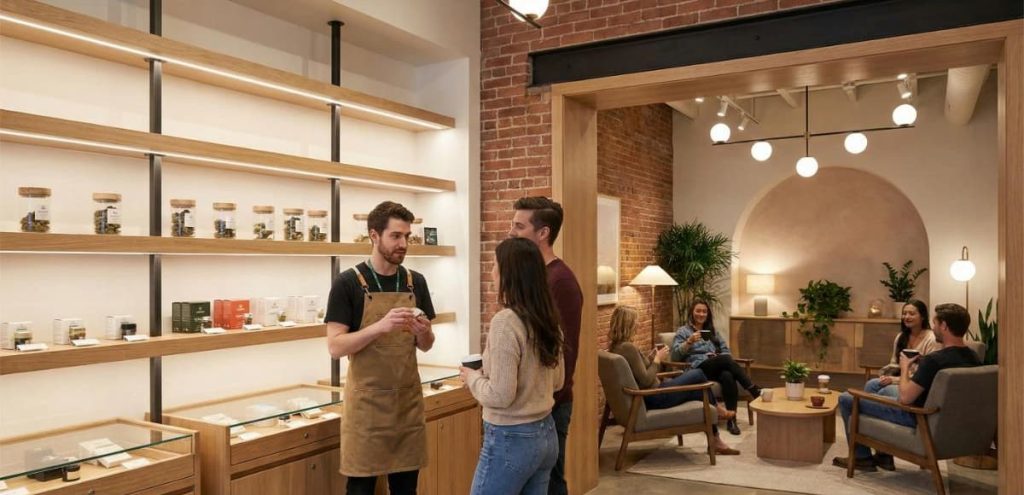
Why Consumption Lounges Matter For Cannabis Marketing
Lounges create time and context, two things a shelf tag cannot. Customers can ask questions, learn dosing, compare formats, and leave with fewer “bad first experiences,” which protects both reputation and retention.
Consumer Experience Drives Brand Loyalty
A well-run lounge environment supports:
- Education that improves responsible use
- Product discovery that feels guided, not pressured
- Community programming that makes a dispensary feel local
Because regulations are strict and localized, the best cannabis marketing starts with compliance. The venues that win usually communicate rules clearly, train staff well, and build trust before they push product.
Marketing Restrictions Make Lounges More Valuable
When paid media options are limited, on-site experiences become a content engine. One lounge event can generate FAQs, local search pages, customer education clips, and press-worthy angles, without leaning on restricted ad platforms. That is where a cannabis marketing agency can add leverage: turning compliant experiences into visibility.
Connecticut’s Cannabis Consumption Lounge Landscape
Connecticut is moving cautiously. Public reporting and state materials point to ongoing licensing and regulatory development, including consideration of hospitality-style concepts for on-site use.
If you operate in Connecticut, preparing early is practical:
- Track municipal posture on zoning and health standards
- Build an education-first brand voice suited to hospitality
- Plan local SEO around where people can legally consume, not just what they can buy

Global Context: What Country Smokes The Most Weed?
There is no perfect league table because countries measure cannabis use differently, and data quality varies. At a global level, UNODC reports cannabis as the most commonly used drug worldwide.
Prevalence rates are highest in parts of North America, Oceania, and Western Europe, where legalization or decriminalization has reduced barriers to reporting and use. However, higher reported use does not automatically mean looser public consumption rules. In many countries with widespread cannabis use, consumption is still expected to happen in private settings.
Public smoking bans, indoor air laws, and cultural norms often restrict where cannabis can be used, even when possession is legal. This distinction matters for the U.S. market. American cannabis policy has moved toward creating designated spaces for legal use rather than tolerating informal public consumption.
Consumption lounges are less about encouraging higher use and more about managing where legal use occurs, especially in dense urban areas, tourism-heavy regions, and apartment-heavy housing markets where private space is limited.
What’s Next For Cannabis Consumption Lounges
Expect more “local opt-in” models. Massachusetts is a clear example: statewide rules exist, but cities and towns still decide whether lounges can operate locally. Also expect tighter operational standards. Nevada’s detailed facility and operating rules show where regulators tend to land once lounges scale.
How Cannabis Brands Can Prepare Now
If you want to grow in Connecticut, treat lounges as a signal of where consumer expectations are heading. As social use rules develop, customers will increasingly look for brands that feel safe, transparent, and easy to understand, not just brands with the loudest promotions.
- Build people-first content that answers real questions: Publish clear, practical pages on what a consumption lounge is, where on-site use is allowed, what first-timers should expect, and how to consume responsibly. When your content mirrors the questions customers are already asking, you earn trust before they ever walk into a store.
- Map your visibility to local rules: Lounge policies are often shaped at the municipal level. Create location-specific messaging that reflects what is permitted in each city or town, including consumption rules, event policies, and any local restrictions. That local clarity supports SEO and reduces friction for customers trying to stay compliant.
- Invest in education that reduces risk for new customers: Lounges can bring in curious first-timers, tourists, and infrequent consumers. Make education part of your brand: dosing basics, onset times for different formats, mixing precautions, and how to recognize overconsumption. The more confident customers feel, the more likely they are to have a positive experience and come back.
- Train staff and align your brand voice: The best lounge-driven brands sound consistent everywhere: menus, signage, budtender scripts, and website FAQs. Tight alignment prevents mixed messages and helps customers make decisions without confusion.
- Turn in-person moments into compliant content: Lounges create natural opportunities for FAQs, “how it works” explainers, product education, and community-focused storytelling. Capture what people ask in real life and use it to shape your content strategy, local pages, and search-friendly Q&A.
In Connecticut, the brands that win will not just be present when lounges arrive. They will be the ones customers already trust to guide them through the rules, the experience, and the product choices with clarity.
Frequently Asked Questions
What state is the most 420-friendly?
California is widely considered the most 420-friendly state due to its long-standing legalization, large number of dispensaries, and local approval of cannabis consumption lounges in select cities.
What state has the biggest cannabis market?
California has the largest cannabis market in the U.S., generating billions in annual legal sales and supporting the highest number of licensed cannabis businesses nationwide.
What state has the highest cannabis prices?
Illinois consistently ranks among the states with the highest cannabis prices because of limited licenses, high taxes, and strong demand.
Is Connecticut cannabis friendly?
Connecticut is moderately cannabis friendly. Adult -use of cannabis is legal, dispensaries operate statewide, and regulators are actively developing frameworks for expanded access, though public consumption remains restricted.
Can you smoke in CT state parks?
No. Smoking or consuming cannabis is prohibited in Connecticut state parks, beaches, and other public spaces.
Plan Your Next Move in Connecticut
If you operate in Connecticut, treat lounges as a near-term signal that will affect foot traffic and customer education. The best positioning is straightforward: publish clear, compliant answers to what customers are already searching, and be ready when your municipality opens the door.
CannaMack helps cannabis operators build compliant cannabis marketing strategies, from local SEO to content that matches real regulations and real consumer intent.